Desserts
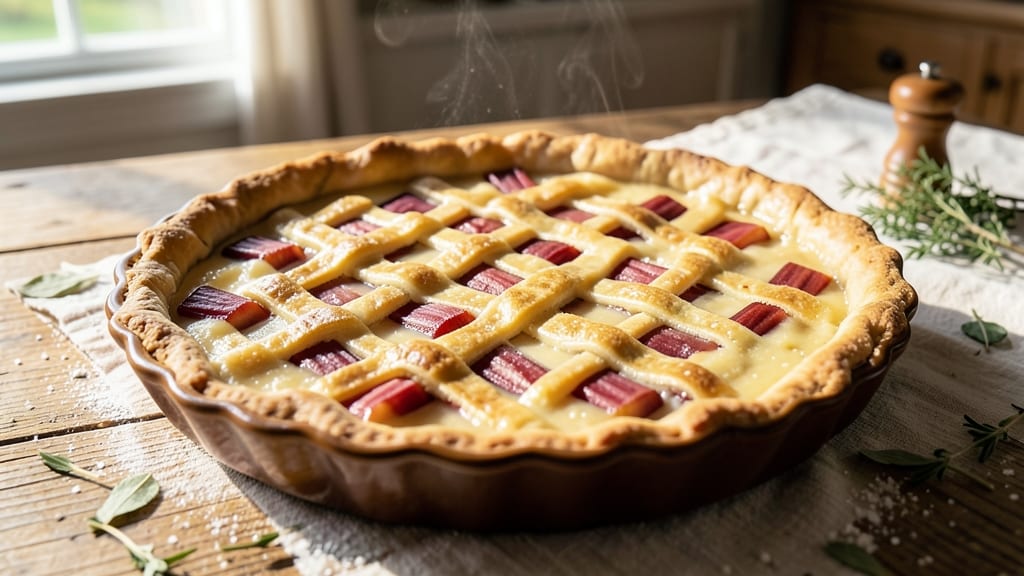
This Amish rhubarb custard pie delivers the perfect marriage of tart rhubarb and velvety vanilla custard—just like Grandma used to make. The secret lies in a simple, foolproof crust that stays flaky under the vibrant filling, while the custard layer creates that signature silky texture that makes every bite irresistible.
I've refined this recipe over years of testing, ensuring the rhubarb's natural tanginess shines without overpowering the delicate sweetness of the custard.
The beauty of this recipe is its balance—no overly sweet crust or cloying custard here.
Instead, you get a rustic pie with a tender bottom crust, a lattice top for that classic Amish touch, and a filling that's thickened just enough to hold its shape while still delivering that familiar custardy bite.
The stovetop custard method ensures silky perfection without lumps, and the rhubarb gets properly softened without turning to mush.
By the time it emerges from the oven, you'll have a pie with golden-brown edges, a lattice pattern that lets you peek at the creamy layers beneath, and a balance of flavors that makes each forkful sing.
The rhubarb's bright acidity cuts through the custard's richness, creating a harmony that's both comforting and sophisticated. This is the kind of pie that disappears quickly—so be prepared to make another batch.
Whether you're serving it at a family gathering or simply treating yourself to a slice of homemade goodness, this recipe delivers restaurant-quality results with simple techniques. The best part?
It's made with ingredients you likely already have on hand, and the process is straightforward enough for even beginner bakers to achieve perfect results. Let's get started on creating this timeless dessert classic.
Ingredients for amish rhubarb custard pie
Sixteen simple ingredients transform into the most comforting Amish rhubarb custard pie you'll ever taste.
| Ingredient | Amount | Notes |
|---|---|---|
| All-Purpose Flour 🌾 | 2 ½ cups | Unbleached preferred for flakiness |
| Cold Unsalted Butter 🧈 | 1 cup | Cut into small cubes |
| Granulated Sugar 🍚 | ¼ cup | For crust sweetness |
| Ice Water 💧 | ½ cup | For dough binding |
| Salt 🧂 | ½ tsp | Fine sea salt preferred |
| Fresh Rhubarb 🍓 | 4 cups | Trimmed, chopped into 1-inch pieces |
| Granulated Sugar 🍚 | 1 ½ cups | For rhubarb sweetness |
| Lemon Juice 🍋 | 2 tbsp | Freshly squeezed |
| Vanilla Extract 🌸 | 1 tsp | Pure vanilla preferred |
| Large Eggs 🥚 | 2 whole | Room temperature |
| Heavy Cream 🥛 | 1 ½ cups | Full-fat for richness |
| All-Purpose Flour 🌾 | ¼ cup | For custard thickening |
| Granulated Sugar 🍚 | ½ cup | For custard sweetness |
| Salt 🧂 | ¼ tsp | Fine sea salt |
The rhubarb is the heart of this pie, so pick the brightest stalks—they should be firm and vibrant, not limp or discolored. Local farmers markets often have the freshest, but any grocery store's produce section works too. Look for stalks that snap when bent, not bend without breaking. The sugar amount balances the tartness perfectly, but if your rhubarb is extra sour, add an extra tablespoon. For the crust, cold butter is non-negotiable—it creates those flaky layers that make this pie legendary. Use a food processor for the dough, but don't overwork it—just pulse until it comes together. And trust me, the extra 10 minutes of chilling the dough makes all the difference.
No rhubarb? Swap in tart cherries or cranberries—just reduce the sugar by a quarter cup. The custard can handle a few substitutions too: half-and-half instead of heavy cream works if you're watching fat, but the texture won't be quite as rich. Fresh vanilla is ideal, but imitation vanilla extract works in a pinch. For the lattice top, use a knife to cut the dough strips—it gives cleaner lines than a roller. And if you're feeling fancy, brush the crust with egg wash before baking for that golden finish. The crust dough can be made a day ahead and stored in the fridge, which is a total game-changer for busy days.
This pie tastes even better the next day, so bake it ahead if possible. Store it in an airtight container at room temperature for up to 2 days, or freeze for 3 months. The custard layer keeps beautifully, though the rhubarb might soften a bit—just reheat for 10 minutes at 350°F to refresh. For serving, dust with powdered sugar or serve with whipped cream. And if you're making this for company, double the recipe—it disappears faster than you can say 'Amish hospitality.'
Why You'll Love This Recipe
- No-Fuss Crust: I swear by this butter-and-flour crust—just cut the fat into dry ingredients, then splash in ice water until it holds. No food processor, no overworking, just a few minutes of gentle pressing into the pan. (Yes, even if you’re not a baker.)
- Tart-Sweet Magic: That rhubarb custard filling is where it gets good—thick, tangy, and just sweet enough to balance the sharpness. The sugar caramelizes into a glossy top when baked, and the custard stays silky, not grainy. Honestly, the first time I tasted it, I nearly burned my tongue reaching for another slice.
- Weekend or Weeknight: This pie is my go-to for brunch when friends drop by or when I need something hearty for a lazy Sunday. Serve it warm with vanilla ice cream, or let it cool for a picnic—it’s just as good either way. (Between us, I’ve even packed it for work lunches. Don’t judge.)
- Budget-Friendly Luxury: Flour, butter, sugar—these are pantry staples, not splurges. A single pie costs me less than takeout, feeds four, and keeps well for days. Leftovers? I reheat slices in the oven until the edges crisp again. (My kids think it’s dessert, but it’s really my secret way to stretch groceries.)
Step-by-step instructions for Amish rhubarb custard pie
Here's how to create that perfect balance of tart rhubarb and velvety custard—every layer matters!
👨🍳 Step 1: Make the Perfect Pie Crust
In a large bowl, combine the 2.5 cups all-purpose flour, 0.25 cup granulated sugar, and 0.5 teaspoon salt. Cut in the 1 cup cold unsalted butter using a pastry cutter or your fingers until the mixture resembles coarse crumbs with pea-sized butter pieces. This texture is crucial—it ensures flaky layers later.
Gradually add the 0.5 cup ice water, 1 tablespoon at a time, mixing gently with a fork until the dough just comes together. Avoid overmixing—you want a lightly moistened dough that holds when pressed. Divide the dough in half, flatten into discs, wrap in plastic, and refrigerate for at least 1 hour. Chilling prevents shrinking during baking and makes rolling easier.
🥘 Step 2: Prepare the Rhubarb Filling
In a large bowl, toss the 4 cups fresh rhubarb with 1.5 cups granulated sugar, 2 tablespoons lemon juice, and 1 teaspoon vanilla extract. Let it sit for 15 minutes—this allows the sugar to draw out the rhubarb's juices and soften it slightly. The filling should be sweet-tart and glossy, with just enough liquid to coat the bottom of the bowl.
Here's the thing—don't skip the lemon juice. It brightens the rhubarb's natural tartness and prevents the filling from turning bitter during baking. If your rhubarb is particularly fibrous, you can lightly mash a few pieces with a fork to help thicken the filling as it cooks.
🍳 Step 3: Assemble and Blind-Bake the Crust
Preheat your oven to 375°F. On a lightly floured surface, roll out one dough disc into a 12-inch circle, about 1/8-inch thick. Transfer it to a 9-inch pie dish, gently pressing it into the corners. Trim any excess dough, leaving a 1/2-inch overhang. Roll out the second disc for the top crust.
Line the bottom crust with parchment paper, fill with pie weights or dried beans, and bake for 15 minutes. This blind-baking step prevents a soggy bottom when the juicy rhubarb filling goes in. Remove the weights and bake for another 5 minutes until the edges are just starting to golden. The crust should hold its shape when pressed gently.
🥘 Step 4: Layer Rhubarb and Make the Custard Topping
Pour the rhubarb filling into the pre-baked crust, mounding it slightly in the center. Dot the top with 2 whole large eggs, cracking them directly onto the rhubarb. In a medium bowl, whisk together the 1.5 cups heavy cream, 0.25 cup all-purpose flour, 0.5 cup granulated sugar, and 0.25 teaspoon salt. Pour this custard mixture evenly over the rhubarb.
Roll out the second dough disc and place it over the pie. Seal the edges by pinching them together with your fingers or a fork. Cut a few slits in the top crust to allow steam to escape during baking. Brush the crust with a little water if it looks dry—this helps create that beautiful golden finish.
🔥 Step 5: Bake to Golden Perfection
Bake the pie at 375°F for 45-50 minutes, until the custard is set and the crust is deep golden brown. To check doneness, gently shake the pie—if the custard doesn't jiggle, it's ready. The edges should be bubbling slightly, and the crust should be firm to the touch.
Let the pie cool completely on a wire rack before slicing—this allows the custard to fully set and prevents it from running when you serve it. The contrast of the tart rhubarb and silky custard is what makes this pie truly special. Serve warm with whipped cream for the ultimate Amish-style experience!
Pro Tips For Making Amish Rhubarb Custard Pie
- Chill the Butter First: The crust won’t behave if your butter’s soft—take it out of the fridge 10 minutes before mixing, but no longer. I learned this the hard way when my crust turned greasy instead of flaky, and it’s especially critical for Amish recipes where texture matters more than shortcuts.
- Cut Butter in Small Pieces: Use a knife to chop the cold butter into pea-sized chunks before mixing with flour. Larger pieces melt unevenly, and you’ll end up with a tough crust instead of that signature tender, layered crunch. (Yes, even if you’re impatient like me—this isn’t the step to rush.)
- Pre-Cook the Rhubarb: Simmer the rhubarb with sugar and cornstarch for 5–7 minutes until it’s just tender, not mushy. Overcooking turns it into a gloppy filling, and undercooking means it won’t thicken properly in the pie. Taste it—it should hold its shape but still feel slightly soft.
- Use a Pie Weigh: A 9-inch pie crust should weigh about 280 grams total (including trimming). Too much dough = soggy bottom; too little = weak structure. I skip measuring flour by volume now—I just eyeball the dough’s thickness (about ¼-inch) and weigh it for consistency. (Your future self will thank you.)
Troubleshooting your amish rhubarb custard pie
Crust Too Tough
The most common issue with Amish-style crusts is overworking the dough. If your crust turns out tough instead of flaky, you likely mixed it too much. The key is to handle the dough minimally—just until it comes together.
Use your fingers or a pastry cutter to cut in the butter until you see pea-sized pieces, then add water gradually. Once the dough forms, stop mixing immediately. Also, ensure your butter is truly cold—if it melts during mixing, the crust will lose its flakiness. 💡
Soggy Bottom
A soggy bottom crust happens when moisture from the filling seeps through before baking. To prevent this, always blind-bake your crust for 15-20 minutes before adding the filling. Use pie weights or dried beans to keep the crust shape while it pre-bakes.
If you notice the bottom still looks damp after baking, your oven might not be hot enough—try increasing the temperature to 375°F and baking for an extra 5 minutes.
Custard Not Setting
If your custard layer remains runny or watery after baking, it likely didn't thicken properly. The custard mixture needs to cook long enough to reach 160°F internally for the flour to fully gelatinize.
Bake the pie for the full 45-50 minutes and check doneness by gently shaking it—if the custard jiggles, it needs more time. Another fix is to whisk the custard ingredients more thoroughly before pouring over the rhubarb to ensure even thickening.
Rhubarb Too Watery
Excess liquid in the rhubarb filling can make the pie filling gush out when sliced. To fix this, let the rhubarb mixture sit for 15 minutes before assembling—this allows excess juices to release and thicken slightly.
If your rhubarb is particularly juicy, mash a few pieces lightly with a fork to help absorb some of the liquid. For extra insurance, sprinkle 1 tablespoon cornstarch over the rhubarb before baking to absorb moisture.
Uneven Baking
If the edges bake faster than the center, your oven might have hot spots or the pie isn't preheated properly. Rotate the pie halfway through baking and consider placing a baking sheet on the lower rack to reflect heat upward.
For even browning, brush the crust edges with egg wash before baking. If the top crust browns too quickly, cover it loosely with aluminum foil after 20 minutes to protect it while the center finishes baking.
Cracked Top Crust
Cracks in the top crust usually mean the custard expanded too much during baking. To prevent this, cut a few small slits in the top crust before baking to allow steam to escape gradually.
If cracks still appear, your custard might be too thin—try reducing the cream by 2 tablespoons next time or adding an extra 1 tablespoon flour to thicken it. Brush the crust with a little water before baking to encourage even browning without cracking.
Nutrition facts
Frequently asked questions
Can I make this pie without a lattice crust?
If you prefer simplicity, use a solid top crust instead of the lattice. Roll out the second dough disc, place it over the pie, and cut a few 1-inch slits in the center to allow steam to escape. Seal the edges with a fork or your fingers. The pie will still taste delicious—just without the pretty pattern!
How do I adjust the sweetness if my rhubarb is extra tart?
Start by tasting your chopped rhubarb—if it's very sour, increase the sugar in the filling to 1.75 cups instead of 1.5 cups. For even more balance, add 1 extra tablespoon lemon juice to brighten the flavor. The custard layer's natural sweetness will also help mellow the tartness. Adjust gradually to avoid an overly sweet pie!
Can I prepare the dough ahead of time?
Yes! The pie crust dough can be made 1-2 days ahead and stored in the fridge, wrapped tightly in plastic. For the custard mixture, whisk all ingredients together and refrigerate in an airtight container for up to 24 hours. The rhubarb filling should be made fresh day-of to prevent browning, but you can prep the chopped rhubarb and store it in the fridge for 1 day.
What's the best way to serve leftover pie?
Leftover pie tastes even better reheated! Warm slices in the oven at 350°F for 10-15 minutes until the custard is just melted. For a quick fix, microwave individual slices on 50% power for 20-30 seconds. Serve with a dollop of whipped cream or a scoop of vanilla ice cream to enhance the flavors. Store leftovers in an airtight container for up to 3 days.
Can I substitute the custard with a different topping?
While the custard creates that signature Amish texture, you can try a vanilla pudding layer instead. Mix 2 cups milk, 1/3 cup sugar, 1/4 cup cornstarch, and 1 tsp vanilla, then cook on the stovetop until thickened. Pour over the rhubarb before adding the top crust. The flavor will be slightly different but still delicious—just less creamy than traditional custard!