
Desserts
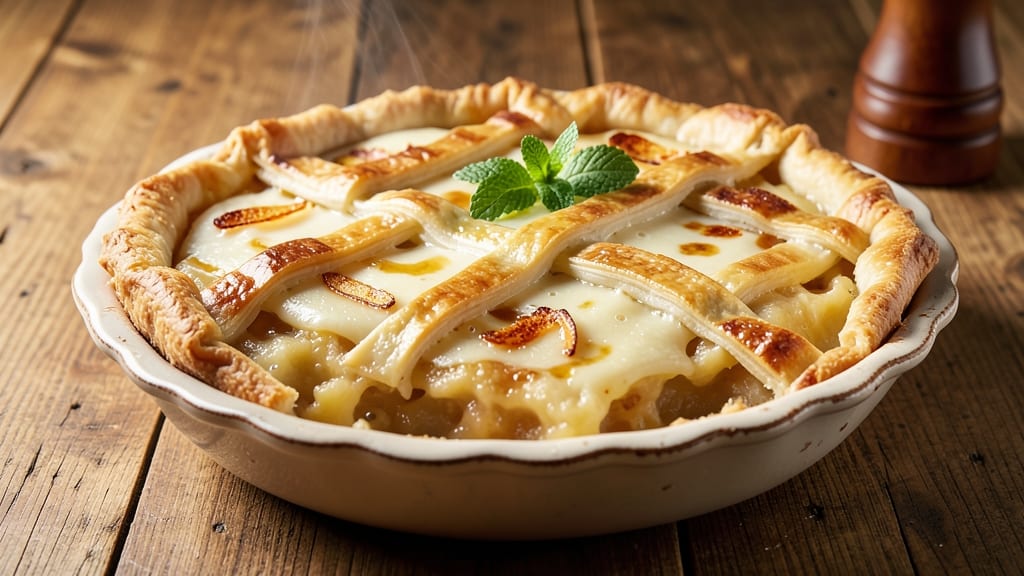
This potato custard pie recipe delivers the perfect balance of creamy custard and flaky crust—every slice reveals a velvety filling with a golden, crispy edge that begs for seconds. ✨ The secret lies in a well-baked crust that holds its shape while the custard transforms into a silky-smooth center, all thanks to precise tempering and baking techniques.
What sets this pie apart is the layered approach: a sturdy crust supports the rich potato filling, which then sets into a custard so smooth it melts on your tongue.
Blind-baking the crust ensures it stays crispy even after the custard's long bake, while the potato base adds earthy depth that complements the custard's sweetness. It’s the kind of dessert that feels indulgent but is actually built on simple, reliable techniques.
The result is a pie with a crispy top edge that contrasts beautifully with the custard’s silky texture, all held together by a crust that’s flaky yet sturdy enough to support every layer.
The custard’s velvety smoothness comes from careful tempering—no lumps, just pure, creamy perfection. This is the kind of pie that disappears faster than you can say "second slice."
Ready in about an hour (including baking time), this recipe is perfect for holiday gatherings or a cozy dessert night. The steps are straightforward, but the techniques ensure professional-quality results every time. Let’s get started!
Ingredients for potato custard pie
Crispy crust meets velvety custard—here's how to nail both layers perfectly.
| Ingredient | Amount | Notes |
|---|---|---|
| Russet Potatoes 🥔 | 2 lb | Peeled, cut into small cubes |
| All-Purpose Flour 🌾 | 2 ½ cups | Plus 2 tbsp for rolling |
| Unsalted Butter 🧈 | 1 cup | Cold, cubed for crust |
| Large Eggs 🥚 | 4 whole | Room temperature for custard |
| Heavy Cream 🥛 | 1 ½ cups | Full-fat for richness |
| Whole Milk 🥛 | ½ cup | Warmed for custard |
| Granulated Sugar 🍚 | ¾ cup | Adjust to taste |
| Salt 🧂 | 1 tsp | Kosher or sea salt |
| Ground Black Pepper 🌶️ | ¼ tsp | Freshly ground preferred |
| Vanilla Extract 🌿 | 1 tbsp | Pure vanilla preferred |
| Ice Water 💧 | ¼ cup | For dough consistency |
The crust is non-negotiable here. King Arthur flour or Bertolli all-purpose gives the best texture, but any high-quality brand works. For the potatoes, Russets are essential—their starch content creates that signature smooth custard. If you can't find them, Yukon Golds work in a pinch, but they'll give a slightly creamier texture. Most grocery stores carry Russets year-round, but specialty markets like Whole Foods often have them pre-peeled for convenience. The butter needs to be cold—pull it from the fridge 15 minutes before mixing to keep it firm but workable.
No heavy cream? Full-fat coconut milk works, though the flavor will differ slightly. Substituting milk for the custard? Use whole milk plus 2 tbsp melted butter for richness. The vanilla extract can be swapped for 1 tsp vanilla bean paste if you're feeling fancy. Salt is critical—Diamond Crystal kosher dissolves perfectly and enhances every layer. For the crust, if you're short on butter, substitute lard at a 1:1 ratio, though butter's flavor wins. And here's a pro tip: Toast the flour and sugar together for 2 minutes before adding liquid—it deepens the crust's flavor dramatically.
The crust dough keeps for 2 days wrapped in plastic in the fridge, but it's best used immediately. The custard filling can be prepped ahead and refrigerated for 12 hours—just whisk vigorously before pouring. For a crispier edge, blind-bake the crust with pie weights or dried beans. Once baked, store leftovers in an airtight container for 3 days. Reheat slices at 350°F for 10 minutes to restore that perfect contrast between crisp and creamy.
Why You'll Love This Recipe
- Here’s what sold me: that velvety texture from the heavy cream and eggs, but the flour thickens it just enough to keep it from feeling too heavy. It’s the kind of pie that tastes indulgent but won’t leave you regretting it the next morning.
- No-Fuss Filling: I swear by this recipe because it’s the kind of thing you can make while half-watching TV. Russets get boiled, mashed smooth, then folded into a custard so rich it feels like a hug in pie form—no finicky layers or temperamental crusts.
- Creamy Without Guilt: Here’s what sold me: that velvety texture from the heavy cream and eggs, but the flour thickens it just enough to keep it from feeling too heavy. It’s the kind of pie that tastes indulgent but won’t leave you regretting it the next morning.
- Budget-Buster Comfort: Russets and eggs are cheap staples, but this pie delivers restaurant-quality richness. I’ll be real: my grocery bill stays low, but my family acts like I’ve outdone myself. That’s the magic of a few simple ingredients working harder than they look.
Step-by-step instructions for potato custard pie
Master this technique and you'll achieve that perfect balance of creamy, velvety filling with a golden, crispy edge every time.
👨🍳 Step 1: Prepare the Potato Filling
Place the peeled, cubed 2 lb Russet Potatoes in a medium saucepan and cover with cold water by about 1 inch. Add 1 tsp Salt and bring to a boil over medium-high heat. Reduce to medium heat and simmer for 15-20 minutes until the potatoes are fork-tender and easily pierced with a knife.
Drain the potatoes thoroughly in a colander, then return them to the saucepan. Using a potato masher or fork, mash until completely smooth with no lumps. Let the mashed potatoes cool slightly—this prevents the custard from curdling when you mix in the warm dairy ingredients later.
While the potatoes cool, warm the 0.5 cup Whole Milk and 1.5 cups Heavy Cream together in a small saucepan over low heat until steaming but not boiling. This gentle warming enhances the cream's flavor and prevents temperature shock when combined with the potatoes.
🍳 Step 2: Create the Custard Mixture
In a large mixing bowl, whisk together the 4 whole Large Eggs, 0.75 cup Granulated Sugar, 1 tbsp Vanilla Extract, and 0.25 tsp Ground Black Pepper until completely combined and slightly thickened. This mixture should be smooth with no streaks of egg white.
Gradually whisk in the warm milk-cream mixture, then slowly fold in the mashed potatoes. The goal is a thick, smooth custard that coats the back of a spoon. If the mixture looks too thick, add 1-2 tablespoons of ice water at a time until it reaches a pourable consistency—this ensures a silky texture when baked.
Here's the thing—don't rush this step. The custard needs to be perfectly smooth to prevent graininess in your pie. If you see any lumps, strain the mixture through a fine-mesh sieve into a clean bowl for an ultra-smooth filling.
🥘 Step 3: Assemble the Pie Crust
In a large bowl, combine the 2.5 cups All-Purpose Flour, 1 tsp Salt, and the 1 cup Unsalted Butter (cold and cubed). Using a pastry cutter or your fingers, work the butter into the flour until the mixture resembles coarse crumbs with pea-sized butter pieces remaining. This texture is crucial for a flaky crust.
Sprinkle the 0.25 cup Ice Water over the mixture and gently toss with a fork until the dough just comes together. Be careful not to overwork it—just until the dough holds when pressed. Turn the dough onto a lightly floured surface and knead gently 3-4 times, then divide into two equal discs. Wrap each in plastic wrap and refrigerate for 30 minutes to firm up.
Roll out one disc of dough on a lightly floured surface to fit a 9-inch pie dish, about 1/8-inch thick. Transfer to the pie dish and trim the edges, leaving a 1-inch overhang. Roll out the second disc and cut into strips for the lattice top or crimped edge. Chill both while you prepare the filling.
🔥 Step 4: Bake the Crispy-Edged Custard Pie
Preheat your oven to 375°F. Line the bottom crust with parchment paper, fill with pie weights or dried beans, and blind-bake for 15 minutes. Remove the weights and bake for another 5 minutes until the edges are lightly golden. This pre-baking prevents a soggy bottom.
Pour the custard mixture into the pre-baked crust, spreading it evenly to the edges. Arrange your lattice top or crimped edge over the filling, sealing the edges by pinching them together. Brush the top with a little beaten egg white for extra shine and color.
Bake for 45-50 minutes until the custard is set but still slightly jiggly in the center (it will firm up as it cools). The edges should be deep golden brown with a crisp texture—this is where the magic happens. If the top browns too quickly, tent loosely with foil after 30 minutes to prevent over-browning while the center finishes cooking.
⏰ Step 5: Rest and Serve for Perfect Texture
Remove the pie from the oven and let it cool completely at room temperature for at least 2 hours. This resting period allows the custard to fully set and develop its velvety texture. The contrast between the crisp edges and creamy center is what makes this pie extraordinary.
Once cooled, store the pie in the refrigerator for up to 3 days or freeze for 2 months. When ready to serve, let it sit at room temperature for 30 minutes before slicing. The warm pie will have that perfect balance of silky filling and crispy, buttery crust that makes every bite worth it.
Pro Tips For Making Potato Custard Pie
- Boil Potatoes Until Fork-Tender: I learned this the hard way—overcooked potatoes turn to mush in the custard, while undercooked ones leave you with a gritty texture. Aim for a knife slipping in easily but still holding shape when pierced (about 12-15 minutes in salted boiling water). Drain immediately and shock in ice water to stop cooking—this keeps them firm for slicing.
- Use Cold Butter for Smooth Filling: Whipping the custard with cold butter (cut into small cubes) prevents lumps and gives that velvety texture everyone loves. If you’re impatient like me, chill the mixing bowl first—it makes a real difference when combining the eggs, cream, and butter. Skip the warm butter unless you enjoy scraping gunk off your whisk later.
- Prevent Cracking with Slow Heat: The custard filling is finicky—rushing it leads to cracks or a watery center. Start by heating the pie on the lowest oven rack for 10 minutes to set the crust edges, then rotate the pan halfway through baking. If the top browns too fast, tent it loosely with foil. Patience here guarantees a silky, unified texture instead of a patchwork disaster.
- Skip the Extra Egg for Crust Stability: I used to add an extra egg to the crust mix for "extra strength," but it makes the bottom soggy. Stick to the recipe’s egg count (usually 1 per crust) and press it firmly into the pan—this creates a sturdy barrier. For extra insurance, blind-bake the crust for 10 minutes with pie weights or dried beans before adding the filling.
Regional styles of this potato custard pie
Southern Comfort Style
In the South, potato custard pie often gets a warm, spiced twist with ½ tsp ground cinnamon and ¼ tsp nutmeg folded into the custard mixture. This version feels like a hug—especially when topped with a lattice crust instead of a solid top.
I like using Whole Foods' organic cinnamon for its bold, warm flavor that pairs beautifully with the vanilla. For extra Southern flair, sprinkle toasted pecans over the custard before baking. 🌶️
New England Classic
Up north, the pie leans into maple syrup for a subtle sweetness. Swap ¼ cup of the sugar for 2 tbsp pure maple syrup (I use Grade B for its deeper flavor) and add 1 tsp bourbon to the custard for a sophisticated touch.
The crust here is often rolled slightly thinner—about ⅛-inch thick—to create a delicate, flaky texture. Serve with a dollop of whipped cream and a sprinkle of crushed graham crackers for texture. 🍁
Midwest Rustic Twist
The Midwest version keeps things hearty with ½ cup cooked applesauce stirred into the potato filling before baking. This adds moisture and a gentle sweetness that balances the custard’s richness.
For the crust, I’ve found King Arthur Flour works perfectly, and adding 1 tbsp cornmeal to the dough gives it a slightly crunchier base. Top with a simple crimped edge and bake until the crust has a deep golden brown—this version feels like grandma’s kitchen. 🌽
Pacific Northwest Adaptation
Out west, the pie often incorporates local blueberries—fold ½ cup fresh or frozen blueberries into the custard for bursts of tartness. Use organic blueberries from Trader Joe’s for consistent quality. The crust here is sometimes brushed with white wine before baking for a subtle, sophisticated flavor.
For a modern touch, add 1 tsp lemon zest to the custard to brighten the filling. Serve with a scoop of vanilla bean ice cream for the ultimate contrast. 🌊
European Influence
Inspired by French crème pâtissière, this version replaces the potato with ½ cup mashed sweet potatoes (peeled and roasted) for a deeper, caramel-like flavor. The custard gets a boost of 1 tsp cornstarch to thicken it further, and the crust is brushed with egg wash for extra shine.
Bake until the edges are golden and crisp, then dust with powdered sugar before serving. This adaptation feels elegant and pairs beautifully with espresso for a dessert-and-coffee moment. ✨
Nutrition facts
Frequently asked questions
Why does the potato custard pie need to rest before slicing?
The 2-hour rest is crucial because it lets the custard fully set and develop its signature velvety texture. When you cut into it too soon, the filling might be too soft or even runny. This resting period also helps the crust firm up, creating that perfect contrast between crisp edges and creamy center that makes this pie so special.
Can I make this pie ahead of time?
The crust can be prepped 2 days ahead and stored wrapped in the fridge. The custard filling can be made 12 hours in advance—just whisk it vigorously before pouring into the crust. For best results, assemble the pie 4 hours before baking so the filling has time to chill, which helps prevent a watery center.
What's the secret to a crispy crust edge?
Blind-baking the crust for 15-20 minutes before adding the filling is key. Use pie weights or dried beans to prevent puffing, then bake until the edges are lightly golden. For extra crispiness, brush the edges with egg wash before the final bake. The lattice or crimped top also helps create those beautiful golden, crispy sections.
Can I substitute the potatoes with something else?
For a similar texture, try ½ cup mashed sweet potatoes (roasted) or ½ cup cooked cauliflower puree—both work well. However, the starchy quality of Russet potatoes is what gives this pie its signature smooth custard. If you're gluten-free, use a certified GF flour blend for the crust and cornstarch to thicken the custard instead of potato starch.
How do I fix a watery custard center?
If your custard isn't set enough, return it to the oven at 325°F for 10-15 minutes until just set. To prevent this, make sure your custard mixture is thick enough to coat the back of a spoon before baking, and don't overmix the eggs. The 2-hour rest also helps the custard firm up properly—never skip this step!